


Skip to product information


$59.00
1. What role this tool plays
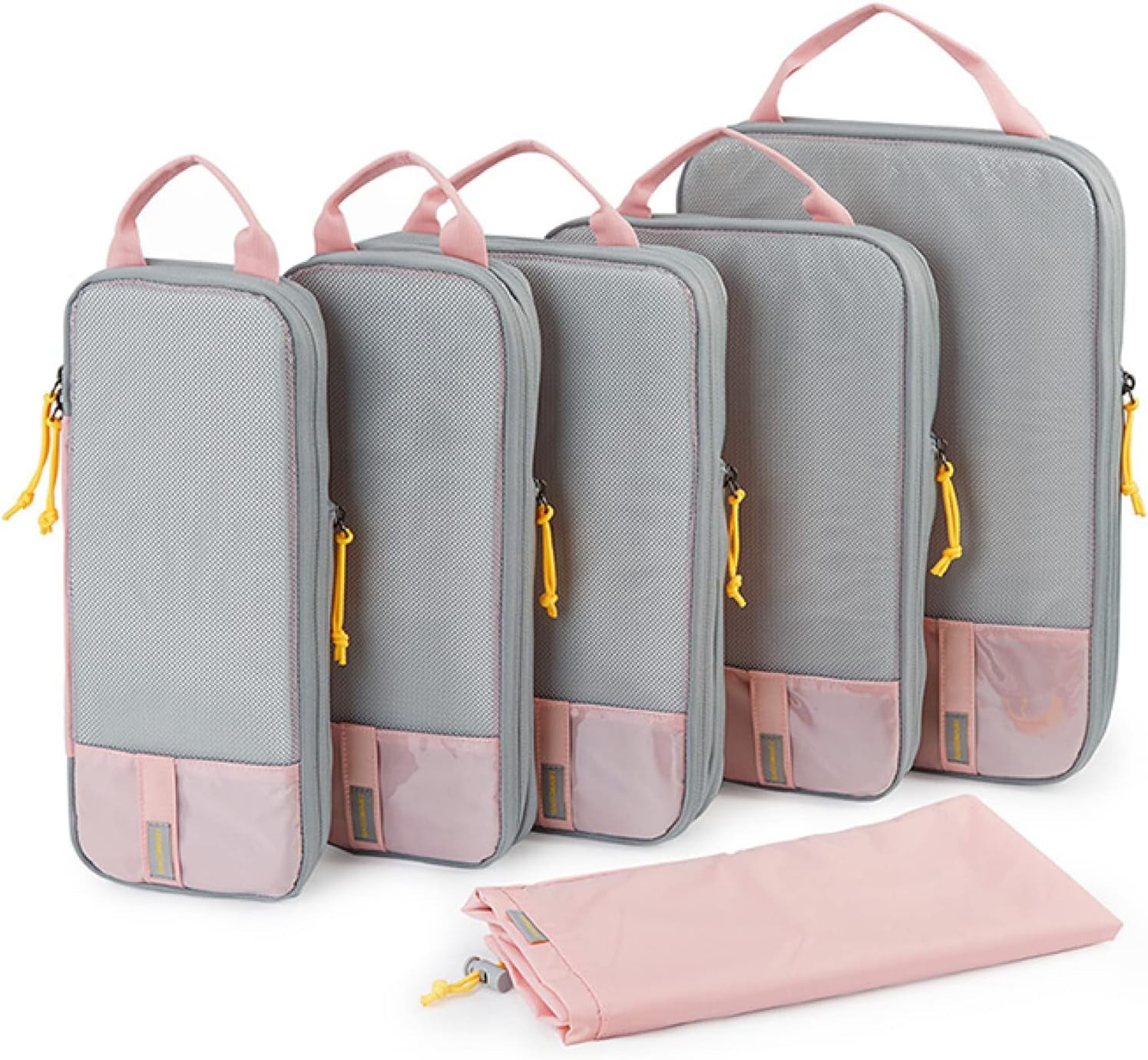
This tool creates a stable storage unit for clothing and soft items
that would otherwise shift, expand, or lose structure inside a bag.
Instead of managing individual items,
it allows them to be handled as one contained volume.
In a rotation-based setup,
this unit functions as the unworn stage.
It protects clean clothing from re-entry of worn items,
preserving trust in what has not yet been used.
2. Why this role matters
Most packing problems are not caused by carrying too much.
They happen when soft items expand, collapse, or move independently
each time the bag is opened.
When items do not hold their shape as a group:
- surrounding items shift to fill the space
- depth alignment breaks
- returning items becomes inconsistent
The issue is not quantity —
it is the loss of structural units.
This tool prevents that by keeping items compressed and contained as one form.
3. What conditions matter
Required
- Can compress contents into a stable volume
- Fully enclosed structure (no open sides)
- Can be handled as a single unit (taken out and returned easily)
- Maintains shape under repeated handling
Optional
- Semi-structured form that resists deformation
- Visibility (mesh or labeling) for quick identification
- Multiple size options to match different storage depths
- Lightweight material that does not add bulk
4. Specification
Basic Information
- Multiple size options (varies by set)
- Lightweight polyester construction
- Set-based configuration (2 / 4 / 6 units)
Structural Features
- Dual-zipper compression system
→ reduces internal air space and stabilizes volume - Fully enclosed fabric structure
→ prevents contents from expanding into surrounding space - Soft but tensioned form
→ allows compression while maintaining overall shape
Behavioral Characteristics
- Can be removed and returned as a single unit
- Holds its compressed form inside the bag
- Limits internal shifting of soft items
- Reduces interaction with surrounding zones
5. How to interpret these specs
- Compression zipper
→ reduces internal movement
→ prevents items from expanding and destabilizing nearby zones - Fully enclosed structure
→ isolates soft items into a single controlled unit
→ avoids gradual spreading over time - Lightweight fabric
→ supports structure without increasing load - Multiple sizes
→ allows matching volume to specific depth and role
→ but requires intentional use (not category-based sorting)
6. Where it fits best
This type of tool works best when:
- storing items that are not accessed frequently
- maintaining a stable base layer inside a bag
- reducing movement caused by soft or flexible materials
- grouping items into a single, consistent volume
In a Clothing Rotation System,
it is best used as the unworn zone:
a protected space where clean items remain clearly separated
from anything that has already been worn.
It is especially effective in environments
where the bag is opened repeatedly but not fully unpacked.
7. Example system fit
In the Packing Layout System
- Functions within the Static Zone
- Creates a stable, low-access volume
that does not change shape over time - Helps preserve depth alignment
by preventing expansion and collapse - Supports boundary stability
by limiting interaction with surrounding zones
8. Limitations
- Does not improve access speed for frequently used items
- Overuse (too many units) can fragment the layout
- Compression does not replace structural zoning
- Requires intentional placement to function correctly
9. Related system uses
(Expandable)
- In the Volume Management System
→ reduces uncontrolled expansion of soft items - In the Return Packing System
→ maintains consistent volume even after use
This tool is one way to stabilize soft items inside your bag.
What often feels like “mess” is not caused by the items themselves,
but by how they expand and interact over time.
If your layout tends to shift after repeated use,
the issue is usually structural — not behavioral.
To understand how this fits into a full setup: